TAK Technology
Soft ferrite · NiZn & MnZn
From formulation to core
TAK / Company profile 2027
03 / R&D & custom
R&D AND CUSTOM DEVELOPMENT

Shaping materials with data

TTechnology
AAssurance
KKeeper

An in-house expert system, FEA simulation and rapid customization take customers from design conditions all the way to samples and measurements.

R&D capability

FDWEB, TAK's own ferrite expert system, brings together nearly 30 years of formulations and data from more than 6,500 sintering programs. It predicts pressing and sintering parameters, tooling shrinkage and pressing pressure, then corrects them with measurements from trial production — supporting mold design and green-core forming.

TAK's own FEA electromagnetic simulation extends from 3D modelling to magnetic fields, DC-bias saturation and temperature rise, with models calibrated against measurements to help predict inductance, bias and temperature-rise trends; AI-assisted R&D also helps tackle technical problems.

The material development team releases new MnZn and NiZn formulations every year and has long collaborated with ITRI and Fu Jen Catholic University in Taiwan; NiZn materials can be developed exclusively for a customer.

Nearly 30 years
Formulation data
6,500+
Sintering-program data
6staff
Material development
22staff
Product development

FDWEB expert system

Predicts pressing and sintering parameters and tooling shrinkage from formulation and sintering-program data, then corrects them with measurements from trial production.

FEA electromagnetic simulation

3D modelling, magnetic fields, DC-bias saturation and temperature rise, with models calibrated against measurements.

Dedicated Ni-Zn materials

NiZn materials can be developed exclusively to a customer's requirements.
Process control and continuous improvement

Big data links production conditions, sintering and inspection data; any deviation is fed back into process adjustments, closing the control loop.

Automation designed partly in-house, with the degree of automation rising steadily; production quality controlled through ISO/IATF systems; continued investment in AOI automatic visual inspection, with automatic packing machines under evaluation to raise automation and accuracy.

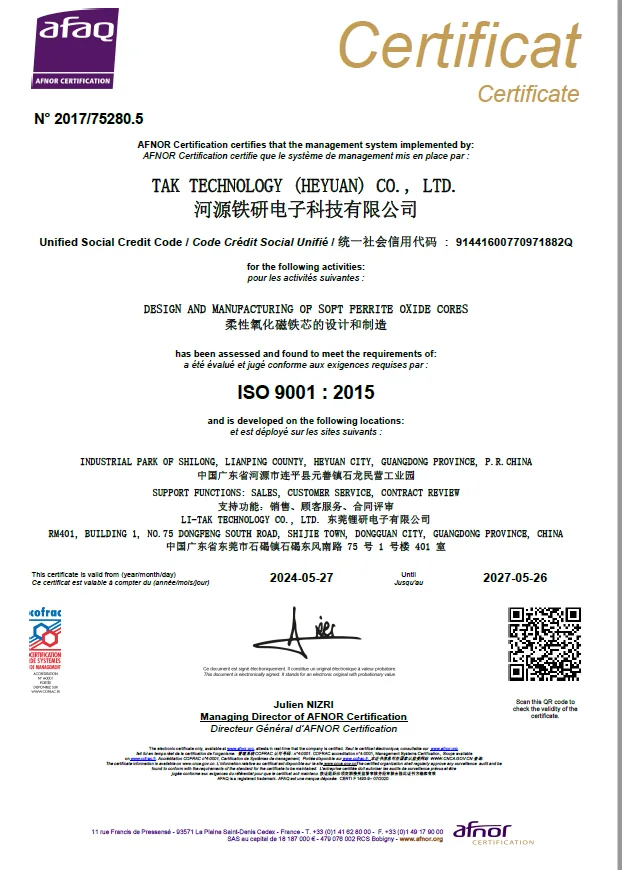
Management system certifications

Our commitment to quality management is a path that keeps extending.

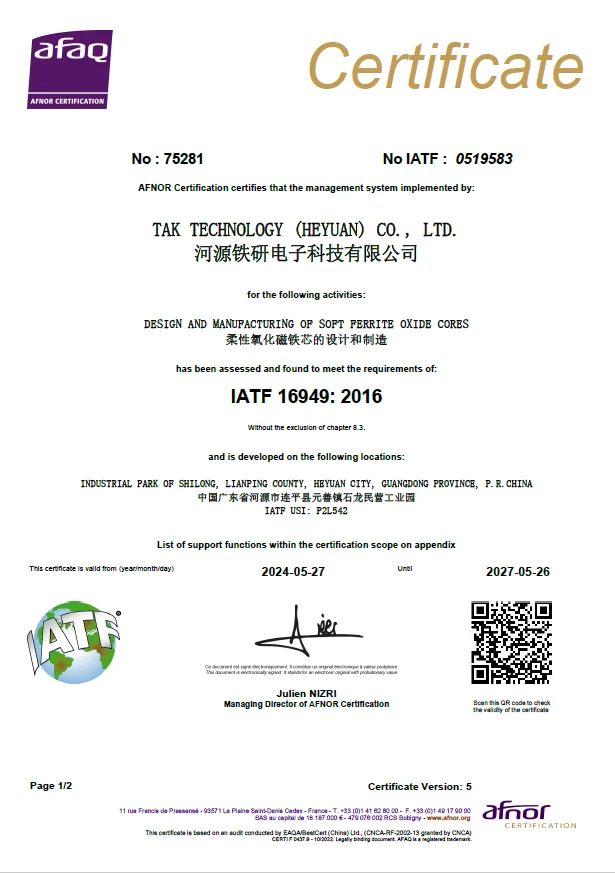
ISO 9001:2015
ISO 9001:2015AFNOR · 2024-05-27 – 2027-05-26
IATF 16949:2016
IATF 16949:2016AFNOR · 2024-05-27 – 2027-05-26
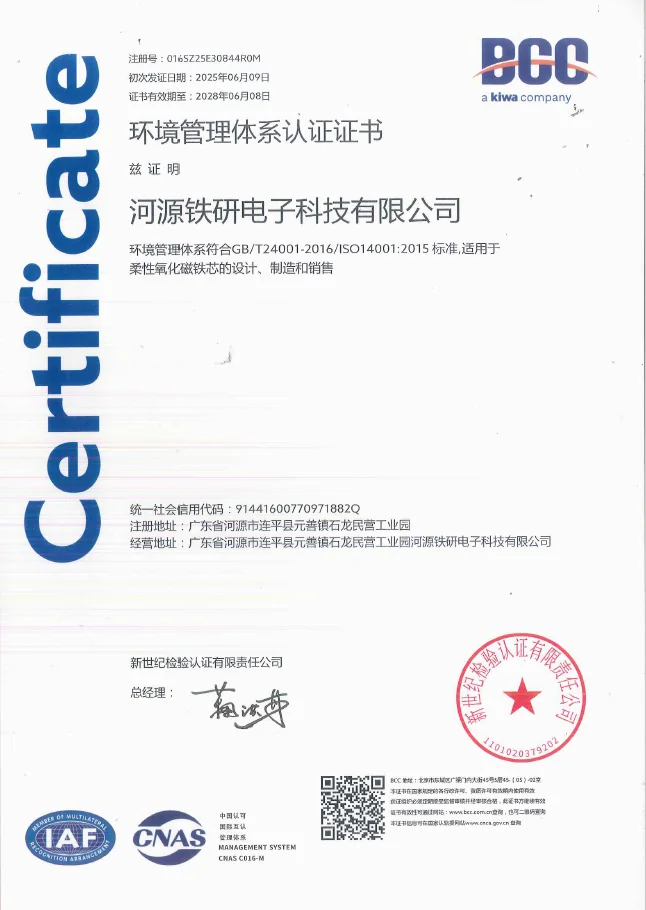
ISO 14001:2015
ISO 14001:2015BCC · 2025-06-09 – 2028-06-08

R&D tools in use

Before sampling, see how the core behaves in simulation. All six screens below come from TAK's own systems.

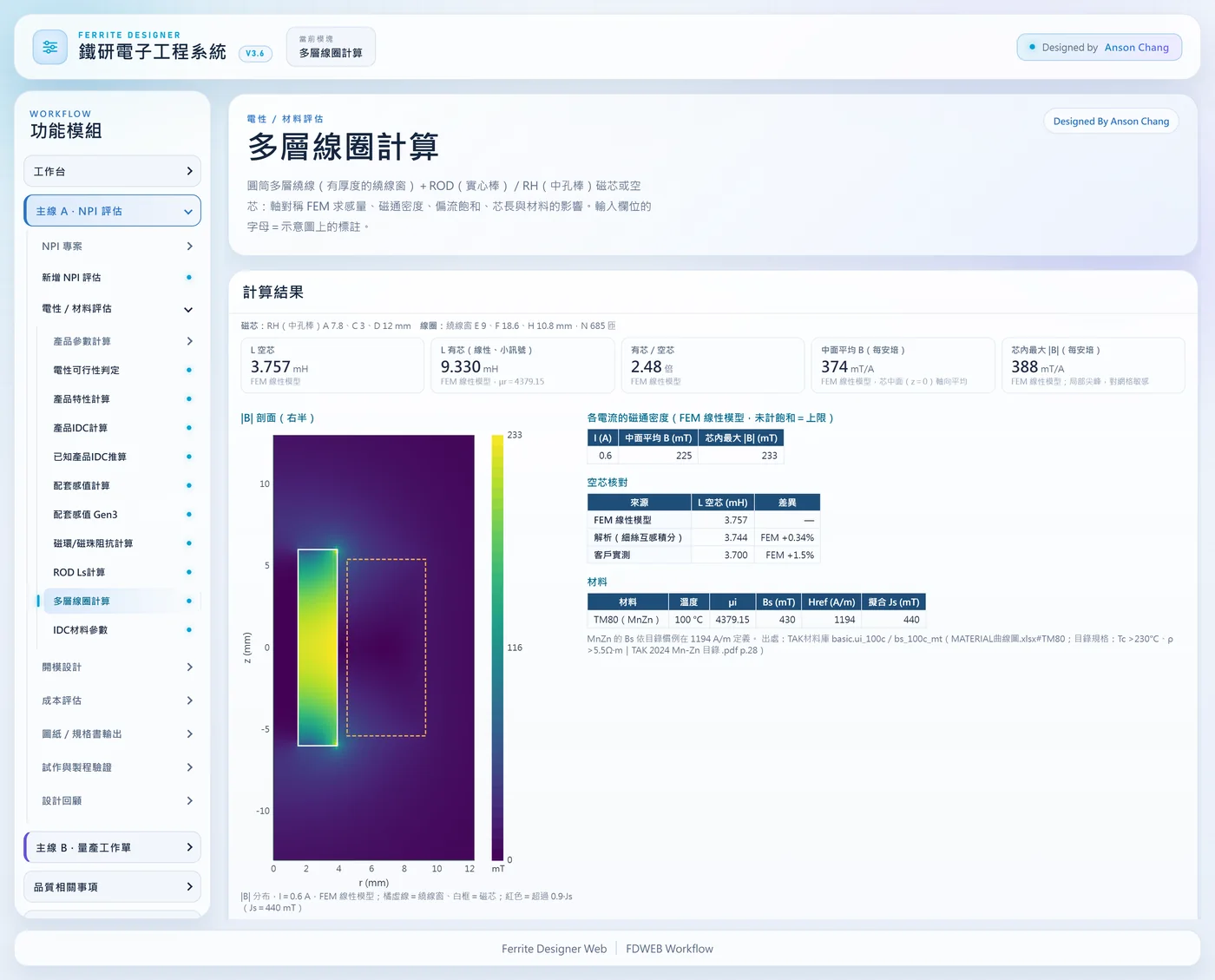
① FDWEB: multilayer coil FEM
① FDWEB: multilayer coil FEMEnter the dimensions and materials of the coil and the RH core; the engineering module calculates the inductance, the flux density at each current and the |B| profile. Air-core inductance by FEM 3.757 mH — 0.3% from the analytical value and 1.5% from the customer's measurement.
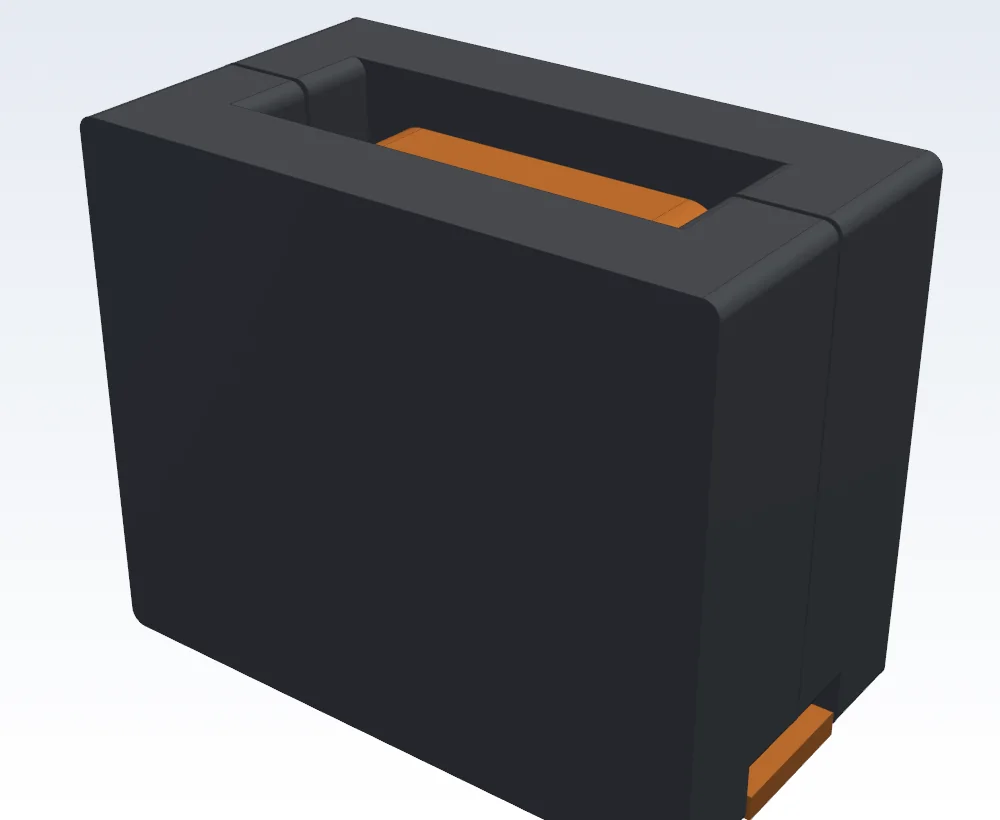
② UD core + copper clip 3D model
② UD core + copper clip 3D modelParametric model built from catalogue dimensions (UD10.5×8.65×2.85, for TLVR); after assembly and interference checks it goes straight into electromagnetic and thermal analysis.
③ UD flux distribution
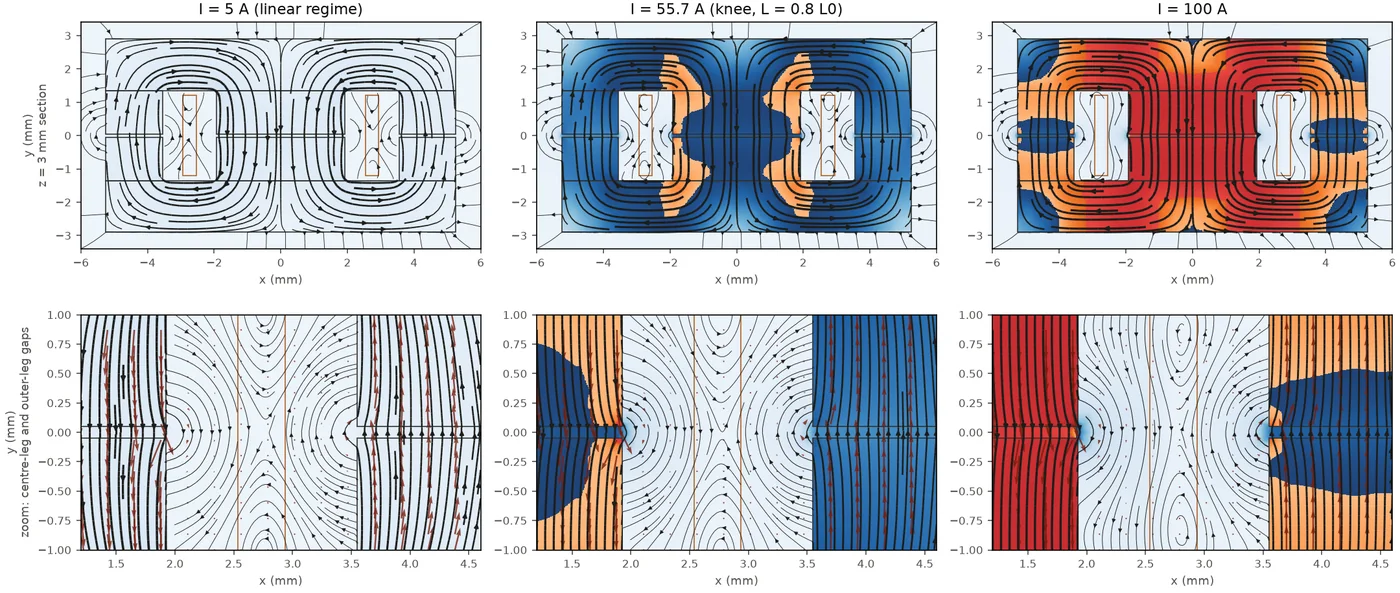
③ UD flux distributionTM65 at 100 °C: flux lines and |B| at 5 A, 55.7 A (knee point, L = 0.8 L0) and 100 A — saturation starts at the inner corner of the center leg. The material model is calibrated with TAK's measured L–I curves.
④ LLC transformer module, co-developed with the end customer
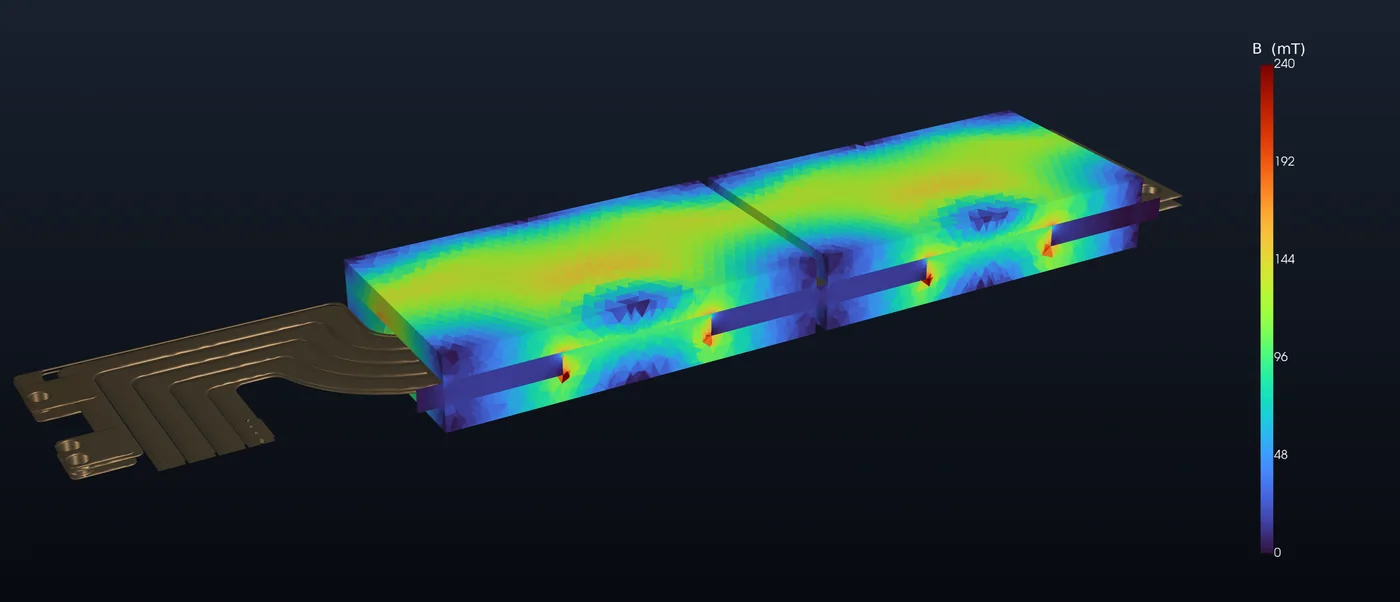
④ LLC transformer module, co-developed with the end customerFlux density distribution in the core at the operating point.
⑤ LLC transformer module, co-developed with the end customer
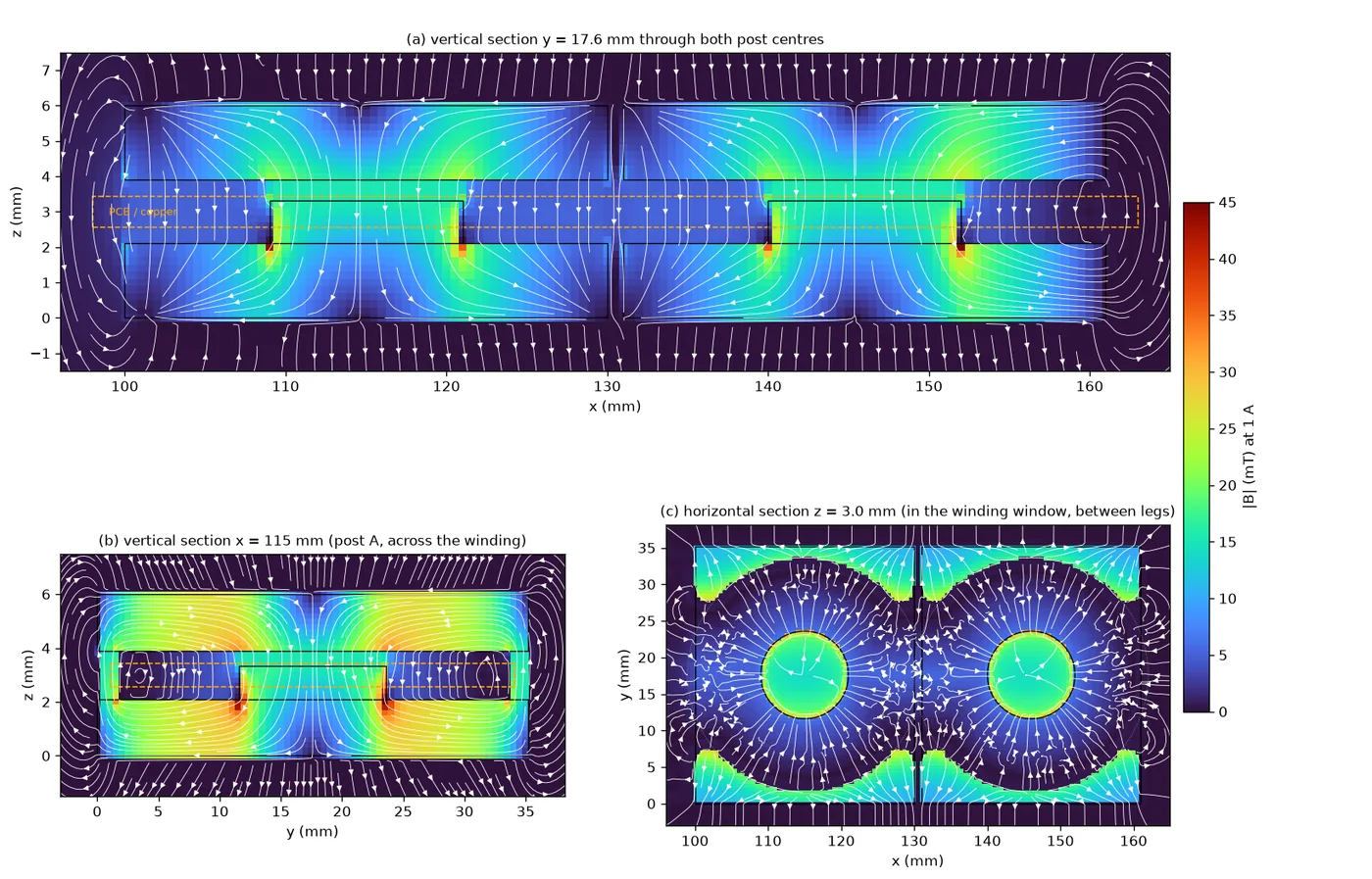
⑤ LLC transformer module, co-developed with the end customerFlux density (per ampere) and field direction on three sections.
⑥ LLC transformer module, co-developed with the end customer
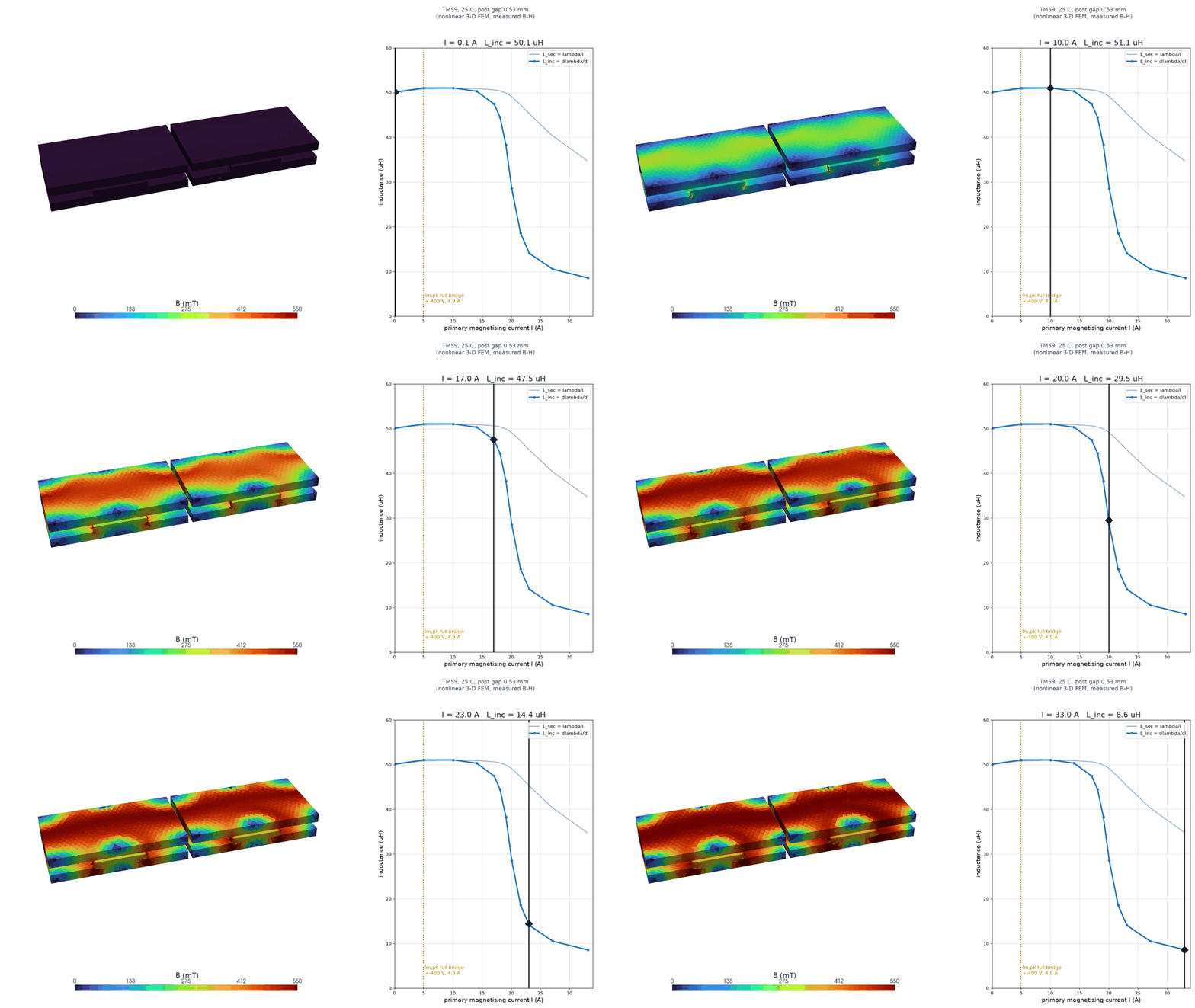
⑥ LLC transformer module, co-developed with the end customerFlux density and inductance as the current rises, at 25 °C.

Screens are examples from TAK's own systems; the air-core inductance comparison and the cored L–I calibration are separate validations.Simulations are for design reference; production specifications follow measurements.

Rapid customization: samples without waiting for tooling

Conventional sampling runs through tooling, pressing, sintering and grinding in turn before a test sample exists. TAK machines samples directly from pre-sintered blocks, removing the wait for new tooling and re-sintering, so the sample reaches you together with its measured data.

Conventional samplingToolingPressingSinteringGrindingTest sample
TAK rapid customizationReady sintered blocksHigh-precision engravingTest sample + measured data

Machined from pre-sintered blocks — no waiting for new tooling or re-sintering

01

Stock first, then machine

Sintered blocks of each material are prepared in advance and machined as soon as a custom request arrives, for the customer's product feasibility analysis.

02

Samples come with data

Measured Pcv/IDC data and a draft approval sheet are provided from the sample stage.

03

Special shapes

Machining and delivery of special shapes.

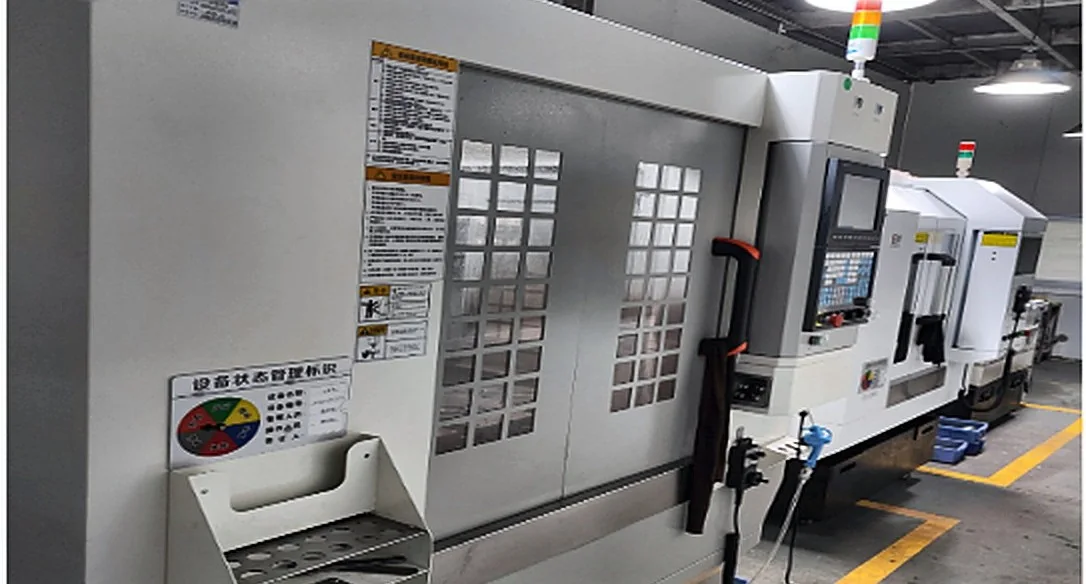
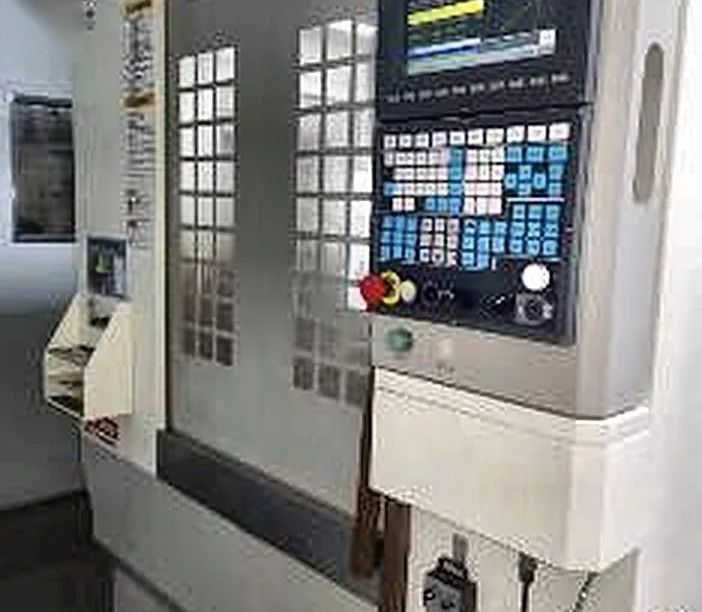
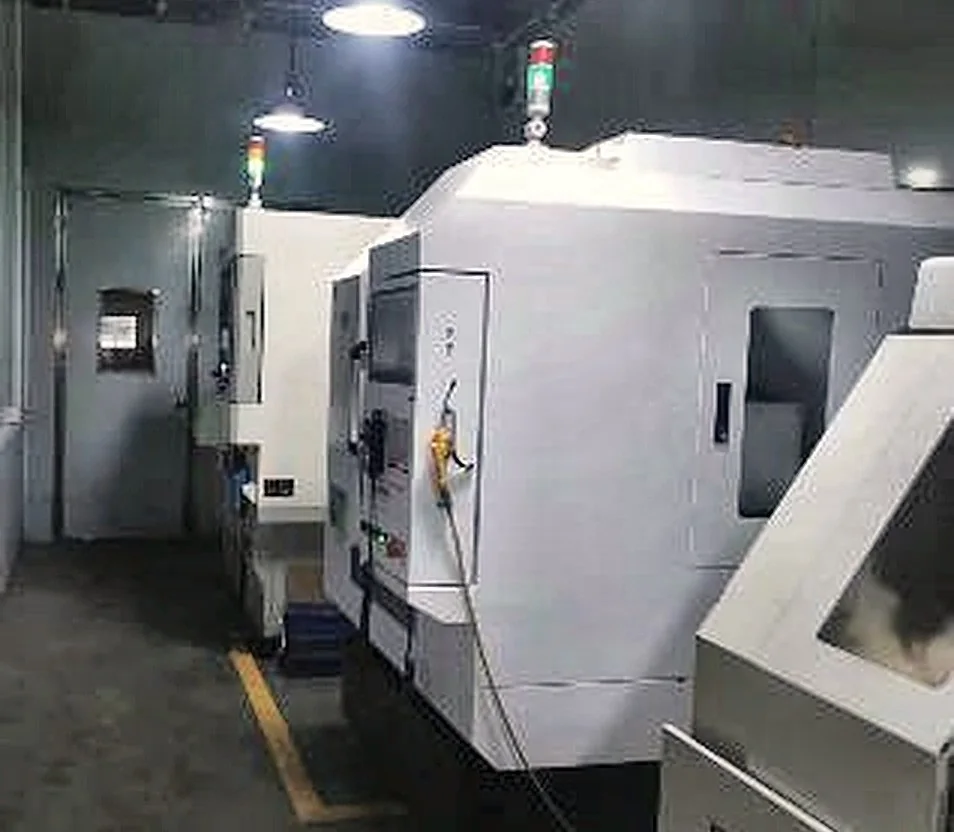
High-precision carving equipment
High-precision carving equipmentHigh-precision carving equipment
High-precision carving equipment

Lead times are given case by case by your sales contact.

Overview ⤢ ←→Switch chapter · EscBack to overview