 TAK Technology
L43
HIGH PERM. & EMI MATERIALS
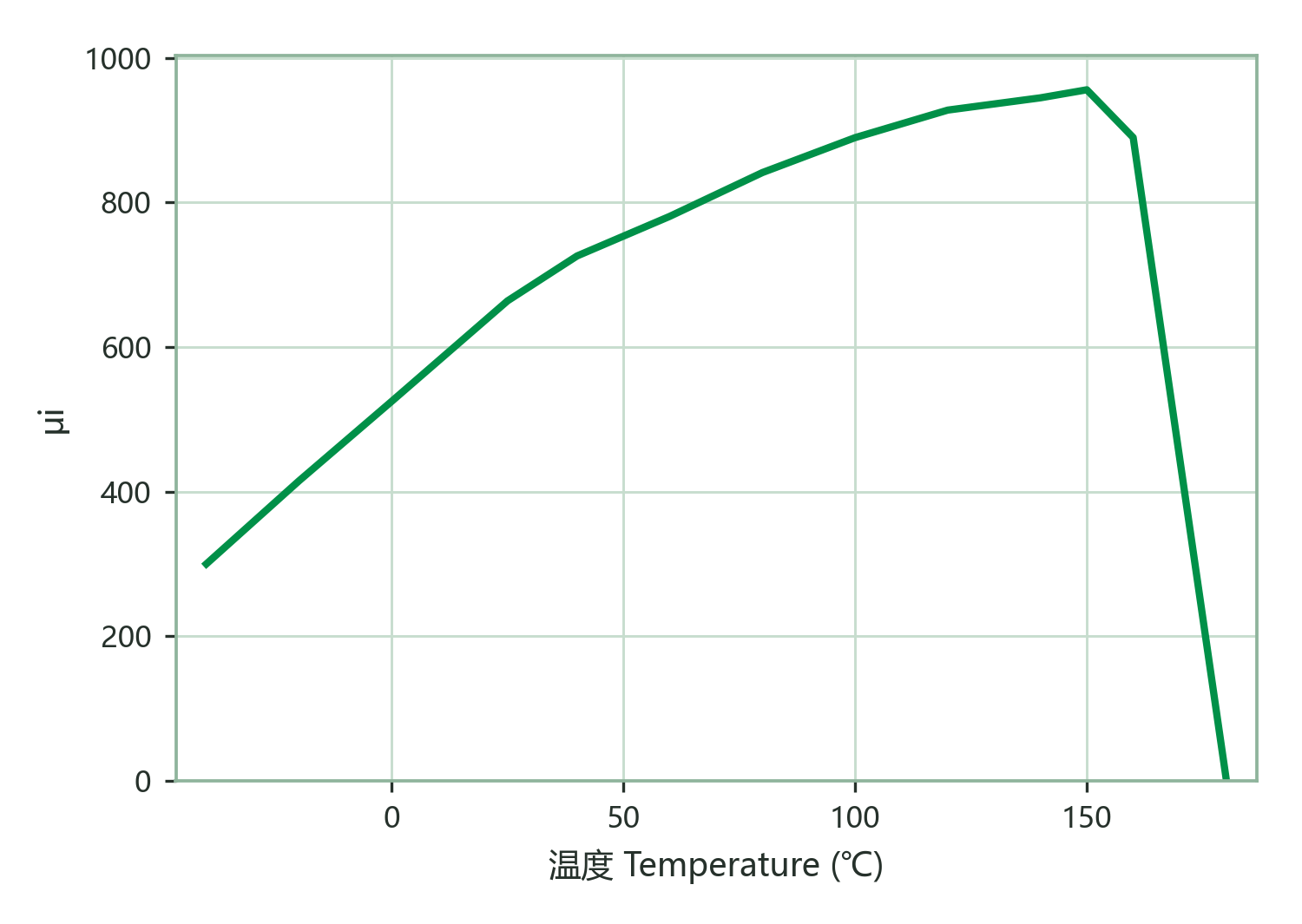
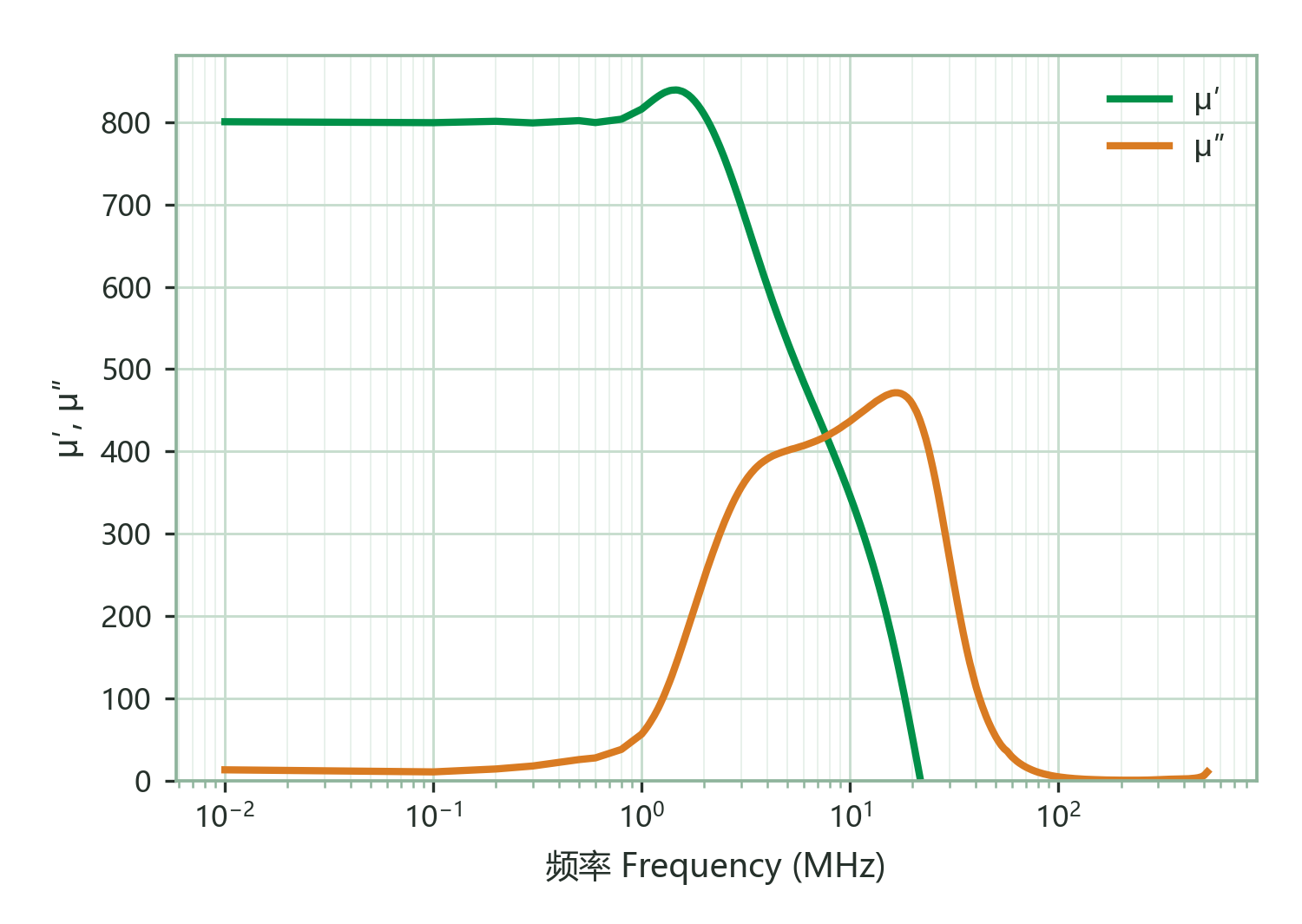
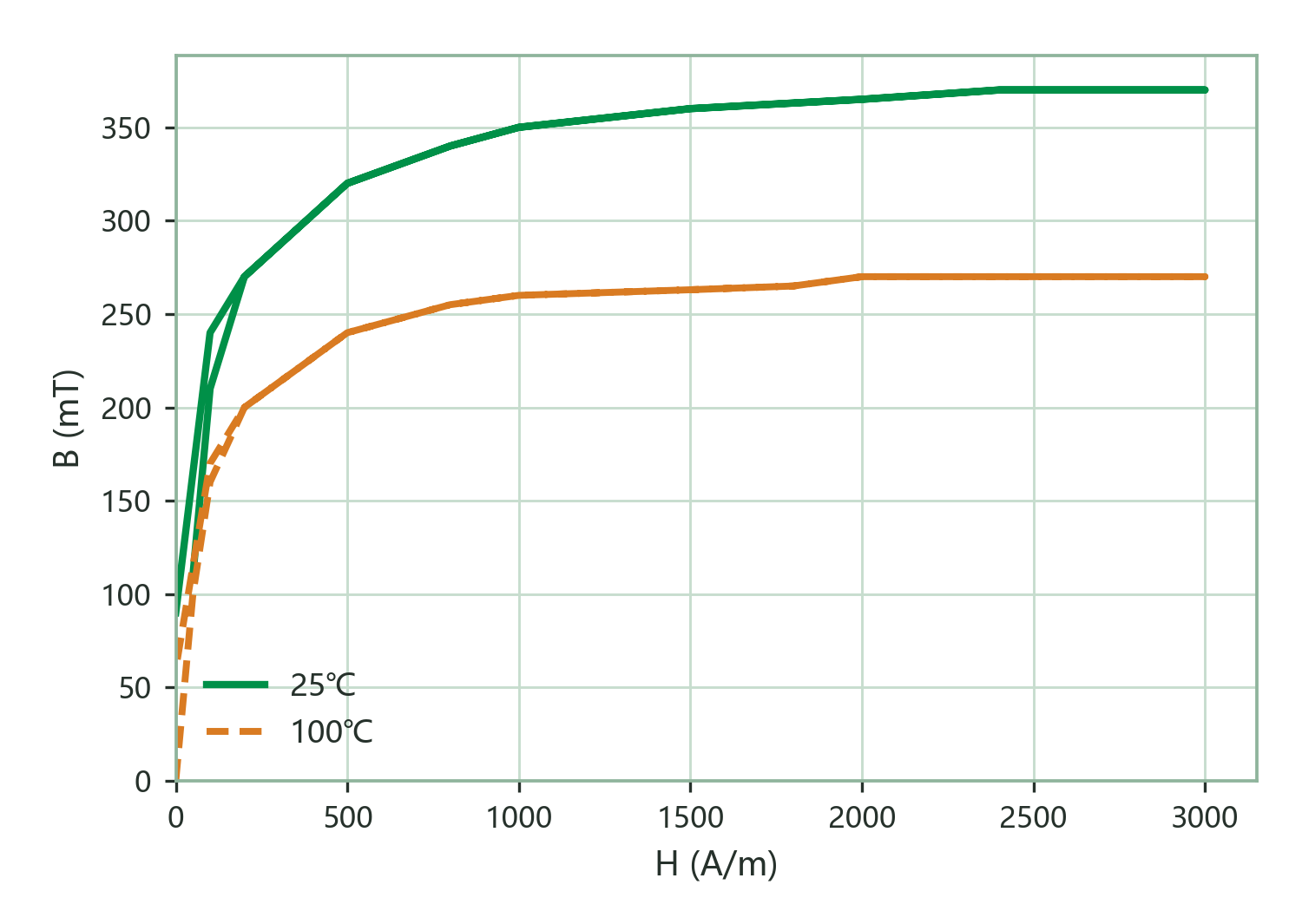
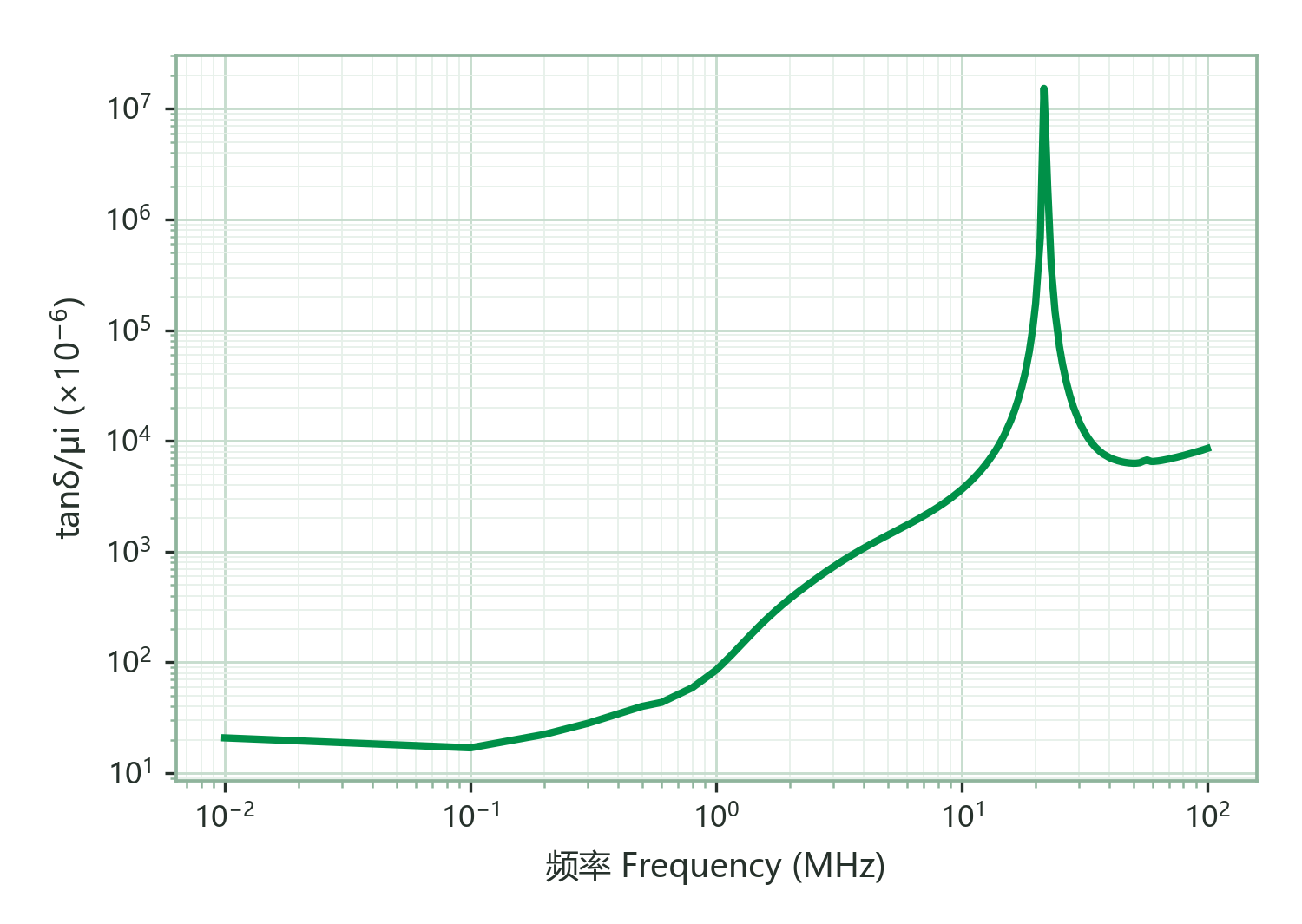
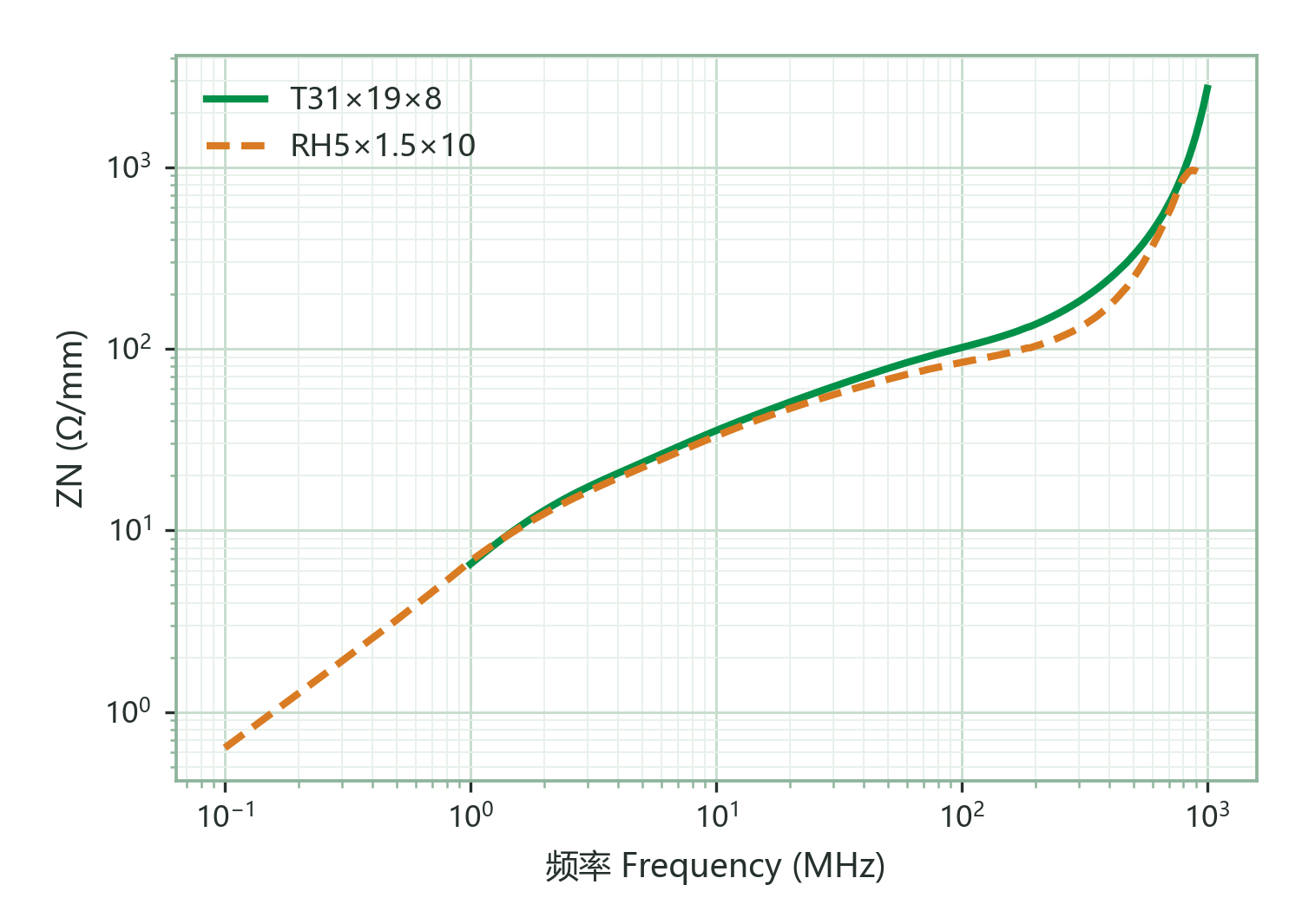
L43 is a NiZn ferrite with an initial permeability (μi) of approx. 800, a saturation flux density (Bs) of approx. 350 mT at 25 °C (245 mT at 100 °C) and a Curie temperature above 160 °C. It is the mainstay EMI-suppression grade: the loss factor is only 20×10⁻⁶ at 0.1 MHz under low flux, while above a few tens of MHz the μ″ loss component rises rapidly and the impedance becomes resistance-dominated, dissipating common-mode noise as heat instead of reflecting it back into the line. Its normalized-impedance curves are given for two fixtures — a T31×19×8 toroid and an RH5×1.5×10 bead (see next page): consult the toroid data for common-mode chokes and larger rings, the bead data for beads and sleeves. Typical uses are EMI suppression filters, common-mode chokes, signal-line suppression rings and power-inlet filtering, as well as RFID antennas. Among the three grades at a nominal μi of approx. 800, L43 leads in broadband suppression (choose SL80 for temperature stability, G5A for high-Bs differential-mode/power); within the L family L43 has the widest band — for higher impedance at lower frequencies step up to L6A (μi approx. 1200), L8A (approx. 1600) or L22A/L28A (2200/2800).
Magnetic Characteristics
| Characteristic | Condition | Value | Unit |
|---|---|---|---|
| μiInitial Permeability | 100 kHz & <0.2 mT | 800±25% | — |
| BsSaturation Flux Density | 3000 A/m · 25 ℃100 Hz | 350 | mT |
| BsSaturation Flux Density | 3000 A/m · 100 ℃100 Hz | 245 | mT |
| BrRemanence | 3000 A/m · 25 ℃100 Hz | 100 | mT |
| BrRemanence | 3000 A/m · 100 ℃100 Hz | 60 | mT |
| HcCoercivity | 3000 A/m · 25 ℃100 Hz | 22 | A/m |
| HcCoercivity | 3000 A/m · 100 ℃100 Hz | 17 | A/m |
| αμrTemperature coefficient of permeability | 20~60 ℃ | 4 | ×10⁻⁶/K |
| tanδ/μiRelative Loss Factor | 0.1 MHz & <0.2 mT | 20 | ×10⁻⁶ |
| tanδ/μiRelative Loss Factor | 0.5 MHz & <0.2 mT | 30 | ×10⁻⁶ |
| TcCurie Temp. | 100 kHz & <0.2 mT | >160 | ℃ |
| DDensity | Archimedes method | 5.0 | g/cm³ |
| ρVolume Resistivity | DC Current | 10⁷ | Ω·m |
Characteristic curves
Applications
| Application | Role | Band | Temperature |
|---|---|---|---|
| Common-mode choke / mains EMI filter | First choice | 2–300 MHz | — |
| EMI bead / ring / cable sleeve | First choice | 20–300 MHz | — |