 TAK Technology
L28A
HIGH PERM. & EMI MATERIALS
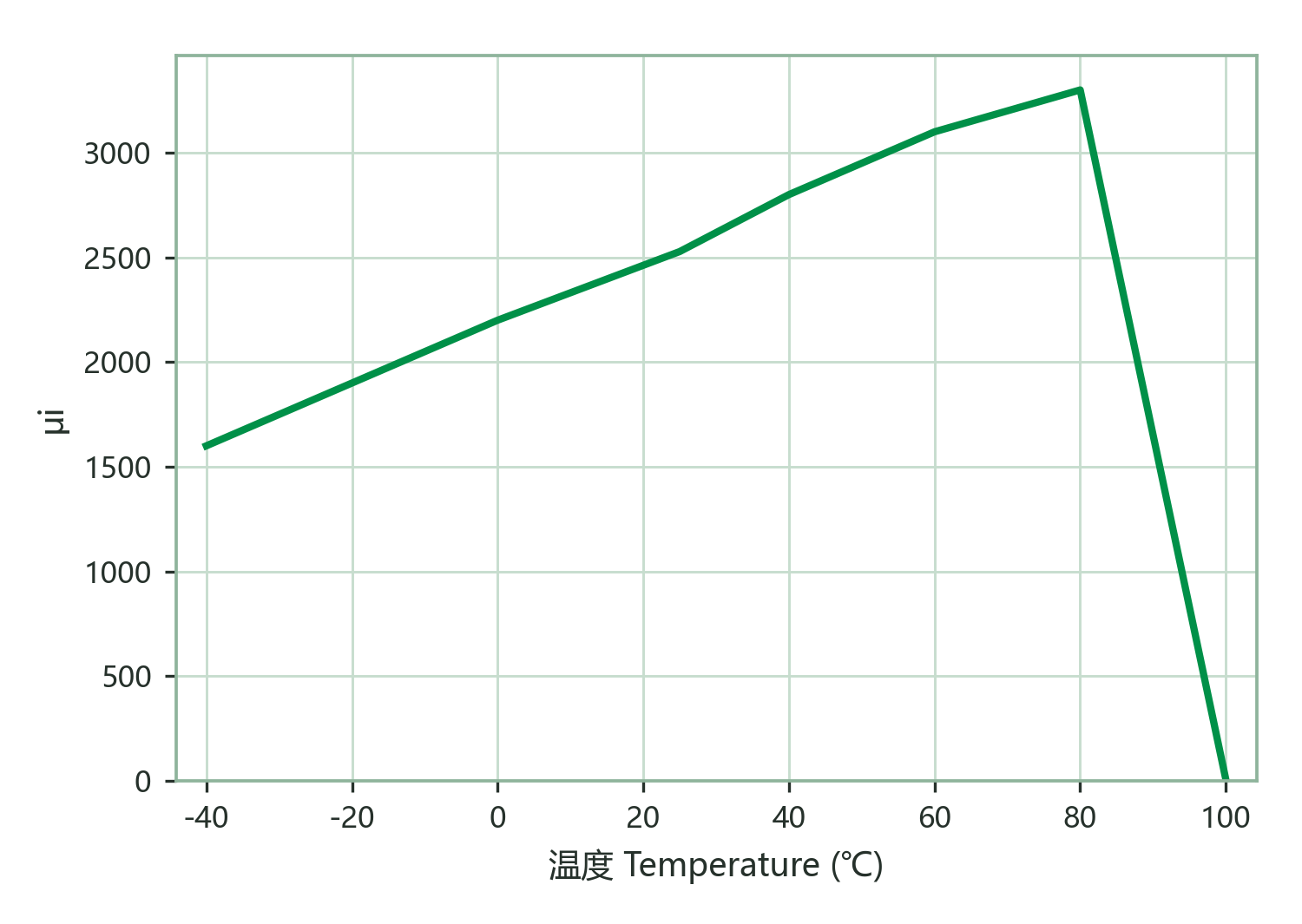
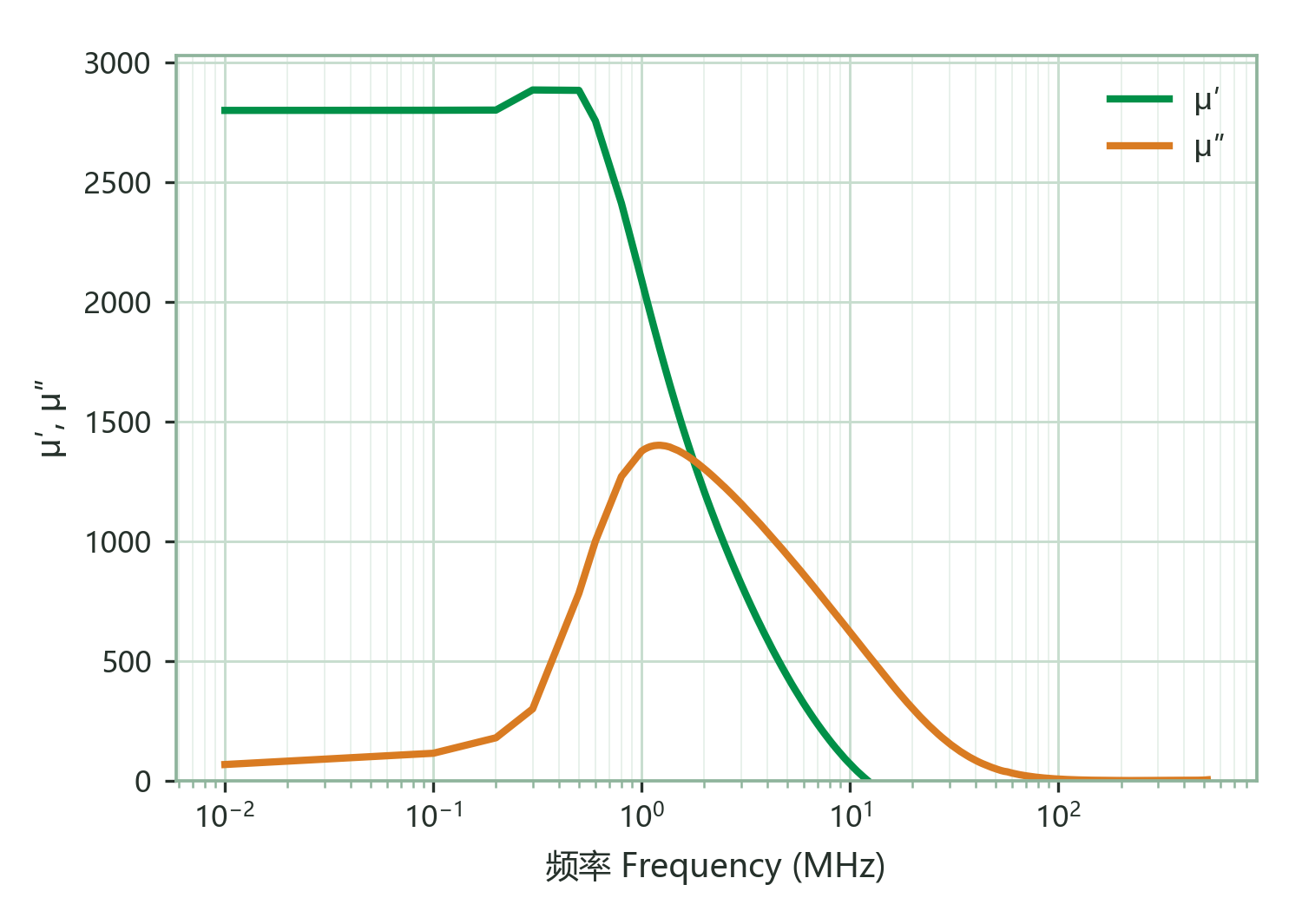
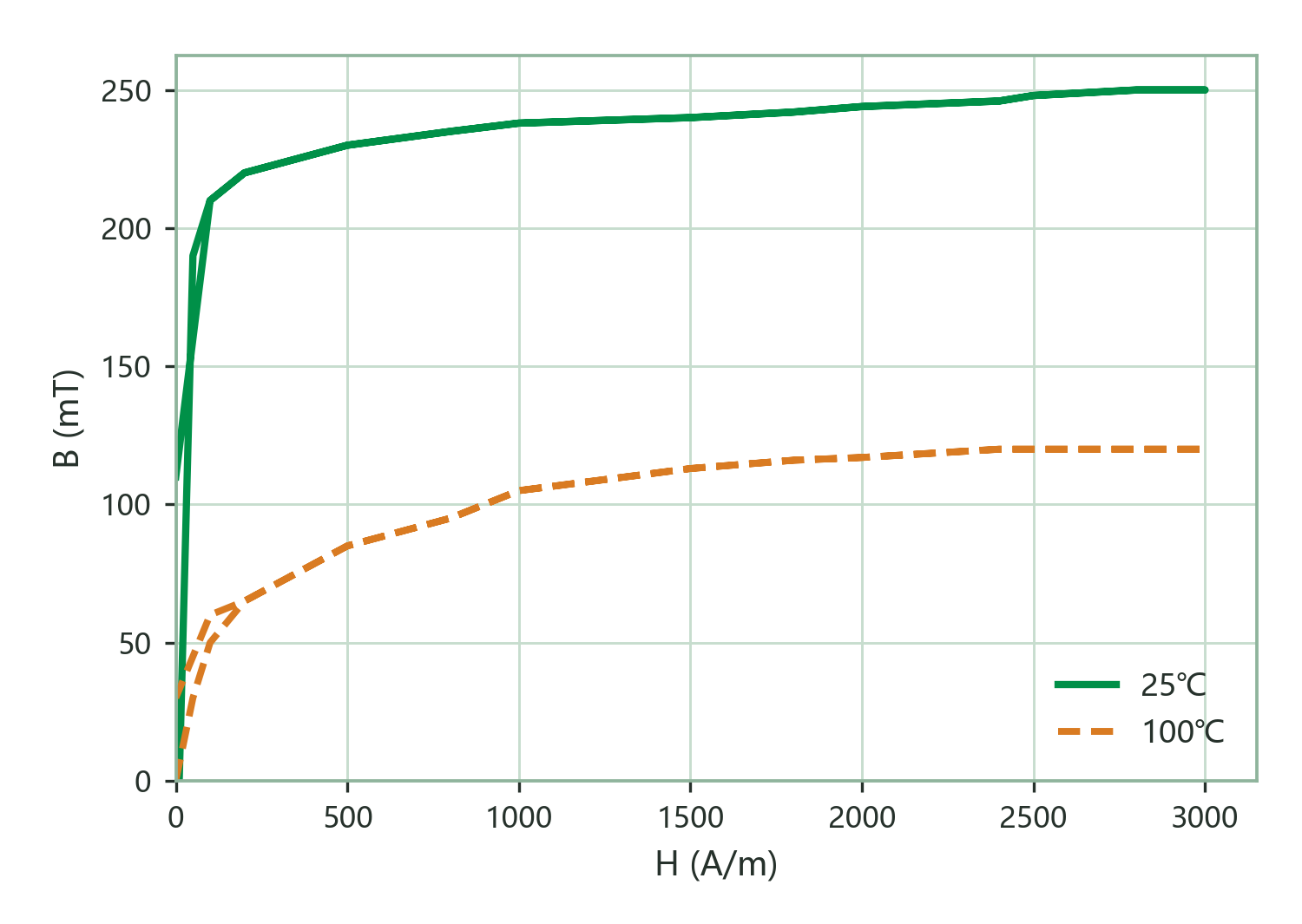
L28A is a NiZn ferrite with an initial permeability (μi) of approx. 2800 — the highest of the NiZn grades in this volume — a saturation flux density (Bs) of approx. 250 mT at 25 °C (160 mT at 80 °C) and a Curie temperature above 80 °C. The highest permeability yields the L family's highest low-frequency impedance, meeting conducted-noise targets in the hundreds-of-kHz range with the fewest turns; the coercivity of only about 8 A/m keeps hysteresis loss minimal, and the high resistivity and long-term stability sustain suppression on communication lines. Typical uses are low-frequency EMI filters, signal-line common-mode inductors and power-inlet suppression. Its Curie temperature, above 80 °C, is the lowest of the family — intended for room-temperature environments; move to L22A or below where self-heating or ambient temperature is significant. L22A is the adjacent step (nominal μi 2800 vs 2200, with overlapping tolerance bands): pick L28A for maximum low-frequency impedance, L22A for extra temperature margin.
Magnetic Characteristics
| Characteristic | Condition | Value | Unit |
|---|---|---|---|
| μiInitial Permeability | 100 kHz & <0.2 mT | 2800±25% | — |
| BsSaturation Flux Density | 3000 A/m · 25 ℃100 Hz | 250 | mT |
| BsSaturation Flux Density | 3000 A/m · 80 ℃100 Hz | 160 | mT |
| BrRemanence | 3000 A/m · 25 ℃100 Hz | 100 | mT |
| BrRemanence | 3000 A/m · 80 ℃100 Hz | 50 | mT |
| HcCoercivity | 3000 A/m · 25 ℃100 Hz | 8 | A/m |
| HcCoercivity | 3000 A/m · 80 ℃100 Hz | 7 | A/m |
| αμrTemperature coefficient of permeability | 20~60 ℃ | 6 | ×10⁻⁶/K |
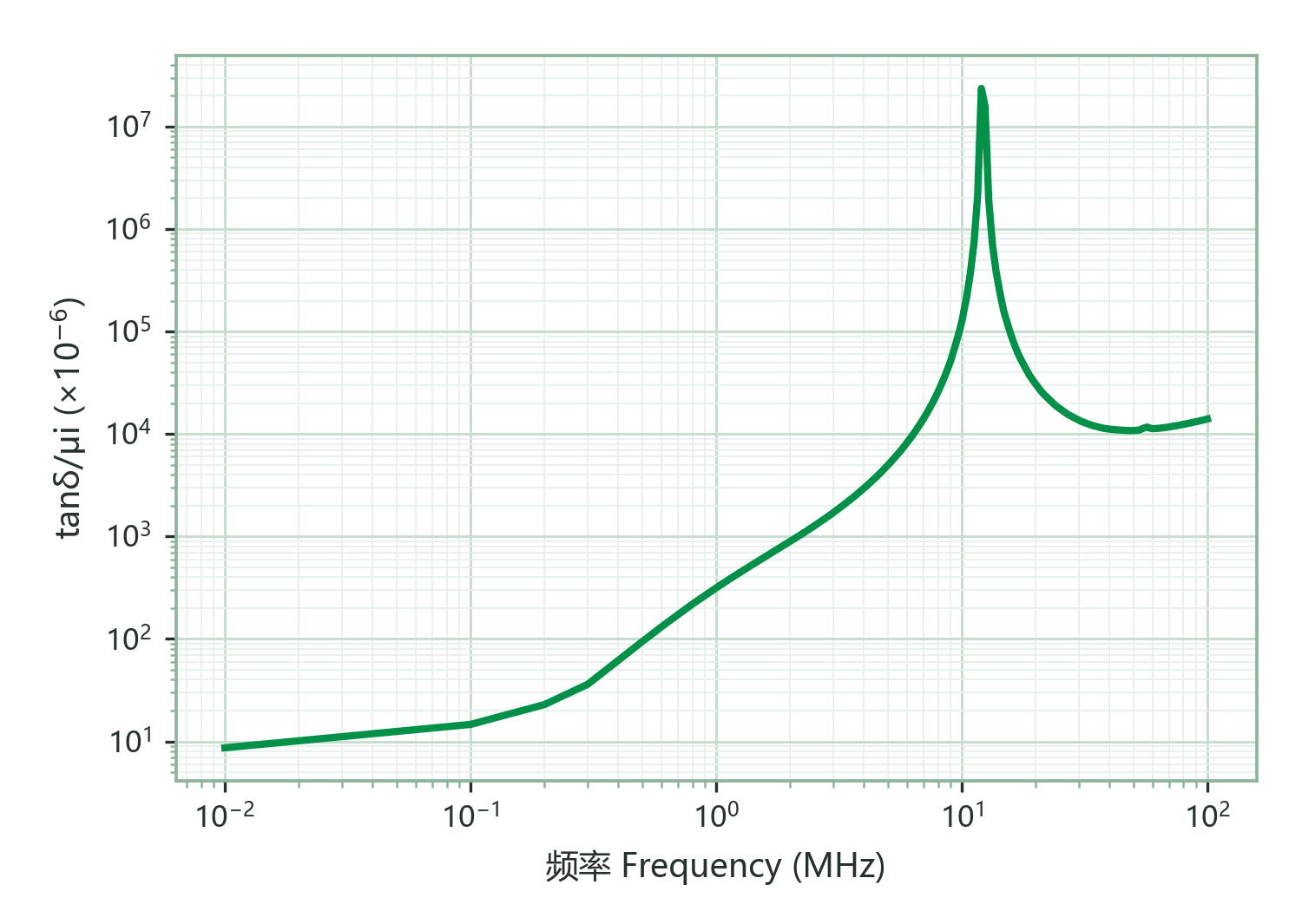
| tanδ/μiRelative Loss Factor | 0.1 MHz & <0.2 mT | 25 | ×10⁻⁶ |
| tanδ/μiRelative Loss Factor | 0.3 MHz & <0.2 mT | 40 | ×10⁻⁶ |
| TcCurie Temp. | 100 kHz & <0.2 mT | >80 | ℃ |
| DDensity | Archimedes method | 5.0 | g/cm³ |
| ρVolume Resistivity | DC Current | 10⁷ | Ω·m |
Characteristic curves
Applications
| Application | Role | Band | Temperature |
|---|---|---|---|
| Common-mode choke / mains EMI filter | First choice | 2–30 MHz | — |
| EMI bead / ring / cable sleeve | First choice | 1–30 MHz | — |